A few days away from day-to-day operations. One critical business question. The owner, board or leadership team returns with decisions made, clear accountability and a 90-day action plan.
A few days away from day-to-day operations. One critical business question. The owner, board or leadership team returns with decisions made, clear accountability and a 90-day action plan.
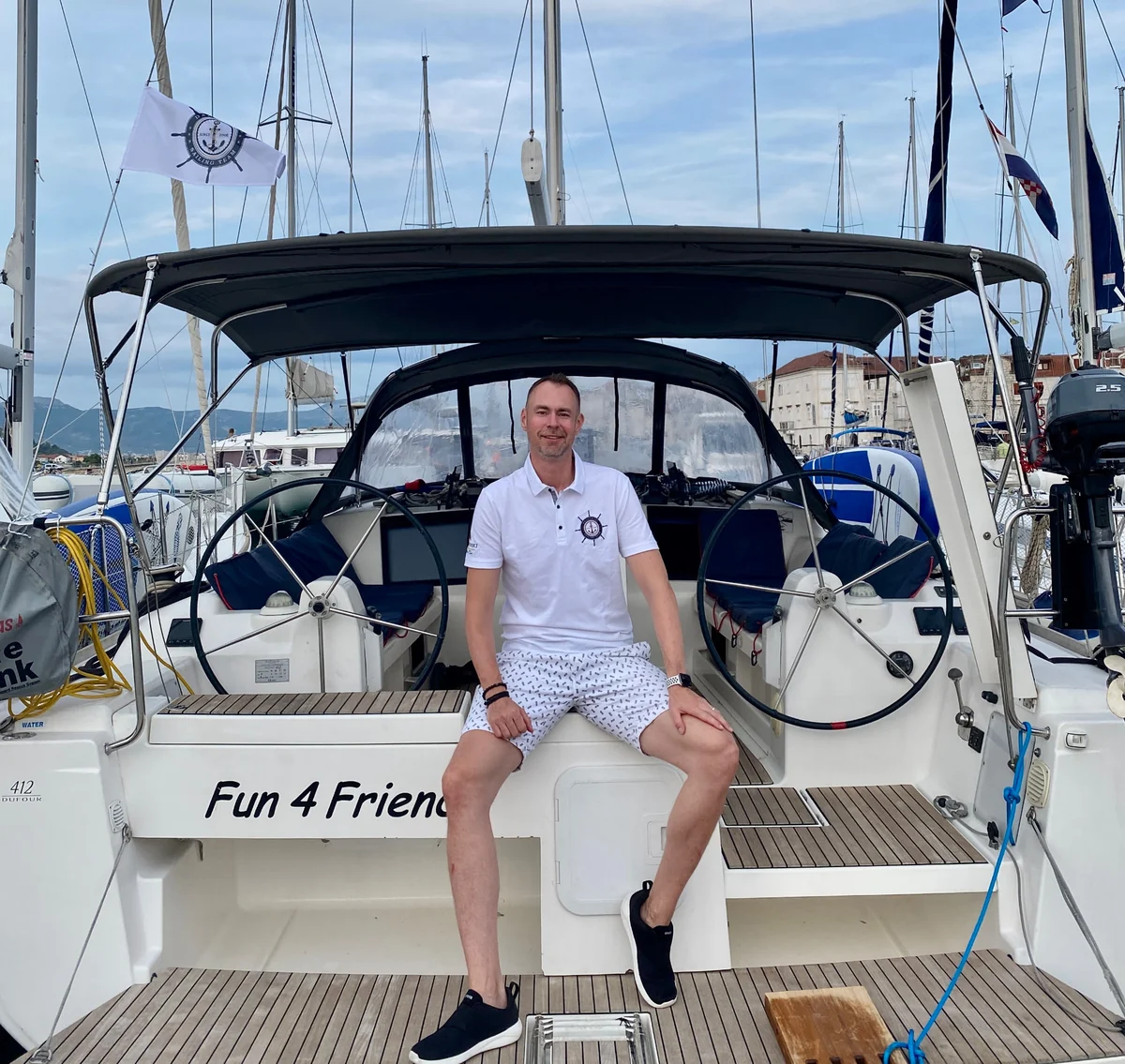
I design and lead intensive strategy offsites on one or more yachts — in Croatia, other warm-water destinations, the Baltic Sea or the Masurian Lakes. Sailing together, sharing life on board and stepping outside the usual environment create space for conversations that rarely happen between meetings.
3–7 DAYS
ONE STRATEGIC GOAL
ONE OR MORE YACHTS
90-DAY PLAN
I match the programme, sailing area, vessels and level of comfort to the goal, the make-up of the team and seasonal conditions.
01PREPARATION
02PERSPECTIVE
03DECISIONS
04IMPLEMENTATION
[01 / OUTSIDE THE DAILY RHYTHM]
Important decisions rarely fail for lack of knowledge. More often, they are crowded out by the demands of the day-to-day.
In the daily rhythm of a business, conversations about the future are interrupted by phone calls, urgent emails, customer issues and the next meeting. The team begins discussing strategy but soon returns to the same tasks and assumptions.
On the water, the rhythm changes. There is time to define the real problem, examine the data, hear different perspectives and stay with the conversation until a decision is reached.
The water won't come up with a strategy for you. It creates conditions in which it's harder to escape the right questions.
01fewer day-to-day interruptions
02more time for conversation and observation
03shared accountability for the result
[02 / THE QUESTION WE SET SAIL WITH]
I don't start by choosing a yacht. I start with the decision the company needs to make.
01
Strategic direction
The company has several possible paths and must decide where to concentrate capital, people and attention.
02
Strategy for the coming year
The board wants to agree its priorities, level of ambition, metrics and what it will deliberately deprioritise.
03
A new product or market
The team is preparing a go-to-market plan, market entry or a major extension of the offer.
04
Marketing, sales and the customer
The company needs to bring marketing, sales, pricing, CRM and customer experience together into one agreed plan.
05
AI transformation
The board wants to choose real use cases and agree the rules, accountability and order of implementation.
06
A new way of working together
The leadership team needs clear roles, decision-making authority, escalation rules and an effective operating rhythm.
07
A critical ownership decision
The company is facing an investment, a change in its business model, succession, the entry of a new shareholder or another decision requiring time, confidentiality and full attention.
One expedition should not attempt to solve seven problems at once. Before we set off, we agree the question whose answer could create the greatest value.
[03 / PROCESS]
Strategy doesn't start at the marina and doesn't end when you step off the boat.
01 / BEFORE
Preparation
Usually 2–3 weeks before the expedition:
a conversation with the project sponsor
defining the decision to be made
interviews with key participants
reviewing data and materials
identifying points of contention
preparing scenarios
designing the agenda
defining the expected result
I do not ask participants to start with a blank page. We arrive with prepared materials, relevant facts and the right questions.
02 / ON THE WATER
Decisions and work
Depending on the day and conditions:
two or three focused sessions
discussions in pairs and smaller groups
scenario analysis
working with data
designing the solution
testing prototypes or messaging
decisions recorded as we go
sailing and shared crew tasks
time for informal conversation and rest
We do not run six-hour workshops under sail. Key sessions take place in port, in a calm bay, at anchor or at a prepared venue on land. Sailing is part of the experience and the teamwork, but safety always sets the limits of the programme.
03 / AFTER RETURNING
Implementation
The results may include:
agreed strategic choices
decisions and rejected alternatives
three to five priorities
a named owner for each action
metrics
a plan for the first 30, 60 and 90 days
a structured decision log
a post-expedition review session
optional further advisory or implementation support
The goal isn't to come back energised. The goal is to come back with decisions the company starts to deliver.
[04 / THE RHYTHM OF THE DAY]
Enough structure to reach decisions. Enough space to see the business from a new perspective.
This is an example rhythm, not a fixed timetable. The final plan for each day depends on the goal of the work, the weather, the sailing area and the skipper's decisions.
08:00 / FOCUS
A morning strategy session in calm conditions.
10:30 / UNDER SAIL
Sailing, crew roles, conversations in pairs and observing how people work together.
14:30 / BUILD & TEST
Working with data, scenarios, prototypes or concrete solutions.
17:30 / DECISION
Summary, decisions and clearly recorded accountability.
20:00 / SHARED TABLE
Dinner, informal conversation and a synthesis of the day.
[05 / WORKING SETUP]
Not just discussion. We analyse, build and test.
We choose the vessels and route so that we can plan working windows of stable connectivity. Depending on the sailing area, we use mobile or satellite connections, suitable power and materials that are also available offline.
This means that during planned sessions you can:
analyse current data
review dashboards
develop and assess commercial options
build simple prototypes
test messaging or landing pages
work on a campaign plan
consult a specialist on selected questions
document decisions and the action plan
I do not promise an uninterrupted office on the open sea. I design conditions in which the team can combine focused work, access to the tools it needs and a deliberate break from day-to-day noise.
[06 / COLLABORATION IN PRACTICE]
On a yacht, a team doesn't just talk about collaboration. It has to practise it.
Limited space, changing conditions, shared tasks and dependence on others reveal how the team communicates, makes decisions and responds to change. These observations can become the starting point for a valuable conversation about how the company operates.
It is not, however, a hidden test of employees or an assessment centre. Nobody is judged on their susceptibility to seasickness, physical fitness or previous sailing experience. Participation in tasks is matched to each participant's abilities and comfort.
Possible areas of work
communication under pressure
clarity of roles
delegating responsibility
listening to different perspectives
the pace of decision-making
responding to a change of plan
the relationship between leader and team
giving and receiving feedback
[07 / FORMATS]
One process. Three expedition formats.
01
BOARD
Typically 4–6 participants · 3–5 days
For an owner, board or small executive team working on one important decision.
one carefully chosen vessel
a high degree of confidentiality
intensive strategic work
the option of greater privacy for participants
a 90-day plan
02
LEADERSHIP
Typically 6–10 participants · 4–7 days
For an executive, commercial or marketing team.
one large or two smaller vessels
joint sessions and work in sub-groups
some tasks carried out as one crew
a greater emphasis on collaboration and strategy execution
03
FLEET
Several crews · a bespoke programme
For a larger team or a project involving several business functions.
several yachts and skippers
a joint opening session and shared decision sessions
tasks carried out by individual crews
exchange of perspectives between groups
the option of combining the sailing with a workshop venue on land
The number of participants depends on the vessels, the sailing area, the nature of the programme, safety requirements and the level of comfort.
[08 / LEVEL OF COMFORT]
From a focused strategy expedition to a fully curated executive programme.
FOCUS
a strategic programme
facilitation
a suitable vessel
a professional skipper
preparation and documentation of the results
SIGNATURE
In addition, as needed:
a vessel with a higher level of comfort
more cabin privacy
an on-board host or chef
selected meals ashore
transfers arranged by a trusted partner
enhanced technical support
BESPOKE
For a larger or particularly demanding expedition:
several vessels
an additional workshop venue on land
private transfers provided by a partner
a bespoke route
additional experts taking part
documentation of the outcomes and follow-on implementation support
The costs of the strategic work and of the charter, travel, crew and additional services are clearly separated in each individual proposal.
[09 / WHERE]
Different waters. A different rhythm. The same standard of work.
01 · FLAGSHIP FORMAT · 4–7 DAYS
The Adriatic and other warm-water destinations
The flagship format for 4–7-day expeditions. More time for work, sailing, rest and conversation outside the formal sessions.
02 · SHORTER · DYNAMIC
The Baltic
A shorter, more dynamic format. The choice of route and programme depends particularly heavily on the weather and the skippers' experience.
03 · 2–4 DAYS
The Masurian Lakes
An easy-to-access 2–4-day format for a team that needs focused work without organising an international trip.
The route is never more important than the objective or safety. Final sailing decisions are made by the skipper based on current conditions. The programme always includes a prepared port-based or land-based alternative.
[10 / THE RIGHT PEOPLE AT THE TABLE]
If a decision requires expertise beyond the core team, I bring in the right specialist — not for prestige, but to answer a specific question.
Each expert’s scope of responsibility is clearly defined. Formal legal or financial opinions are prepared by an appropriately qualified professional or firm.
Depending on the problem, the following may join the preparation or a selected workstream:
a financial expert
a lawyer or legal adviser
a specialist supporting the assessment of a specific area
The expert can take part:
in the preparation before the expedition
in a selected session on board
in a meeting on land
remotely during a pre-planned connectivity window
[11 / RESULT]
Not just memories. Material for action from the first day back.
The result depends on the goal but may include:
01a clear answer to the main strategic question
02agreed choices and conscious trade-offs
03a shared strategic narrative
04three to five priorities
05financial or market scenarios
06GTM assumptions
07decisions on marketing, sales and customer strategy
08an AI transformation roadmap
09team collaboration principles
10clear ownership and accountability
11metrics
12a decision log
13a 30, 60 and 90-day plan
14the first solutions tested
15a scheduled execution review
A good expedition doesn't end with “that was great”. It ends with “we know what we're doing on Monday”.
[12 / GROUND RULES]
Safety isn't an add-on to the programme. It sets its limits.
every vessel has a qualified skipper
participants receive a safety briefing
the skipper decides on the route and whether sailing is possible
the programme has a bad-weather alternative
no sailing experience is required
participants' comfort and limitations are discussed before the expedition
cabin arrangements and standards are agreed in advance
where greater privacy is required, suitable vessels or accommodation on land are planned
participants receive clear information on insurance and equipment
confidential business materials are covered by agreed access rules
critical data and documents can be prepared for secure offline work
alcohol must not interfere with sailing, safety or the work programme
[13 / WHO IT'S FOR]
This format works when the company genuinely wants to make a decision.
A good fit
the owner or project sponsor has the authority to make the decision
there is an important business question
the right decision-makers take part in the expedition
the team is prepared to share the data needed
participants are ready to prepare before the trip
the company wants to come back with a decision and start implementing
the shared experience is meant to support, not replace, the strategic work
This won't be the right format
the company is mainly looking for a holiday or a party
the workshop is only meant to justify the cost of the trip
nobody able to make the decision is taking part
the team doesn't want to do any work before the expedition
the aim is a hidden assessment or selection of employees
participants have to remain available all day for regular meetings
a rigid programme is expected regardless of conditions
the company wants to book a yacht immediately without agreeing the business goal
[14 / WHO LEADS]
Strategy is my work. Sailing is where I think clearly and work with people at my best.
For more than 20 years, I have been accountable for growth, marketing, e-commerce, CRM, customer experience and commercial transformation across multiple markets. I have led teams through situations requiring difficult choices, changes of direction and the translation of strategy into action.
My sailing experience comes from practice, not leadership presentations. I also know that running a safe voyage and leading a strong strategic process require different skills. That is why I personally design and lead the business work, while experienced skippers remain responsible for sailing.
I do not bolt a workshop onto a sailing trip. I design one expedition in which every element serves the company’s objective.
ANDRZEJ DALKOWSKISTRATEGY · GROWTH · COMMERCIAL TRANSFORMATION
My sailing experience comes from practice, not leadership presentations. I also know that running a safe voyage and leading a strong strategic process require different skills. That is why I personally design and lead the business work, while experienced skippers remain responsible for sailing.
I do not bolt a workshop onto a sailing trip. I design one expedition in which every element serves the company’s objective.
[15 / NOT EVERY TEAM SHOULD SAIL]
The same strategic process. A different environment.
For teams for whom sailing is not the right environment, the Brandbusters Expeditions programme can take the form of several days of strategic work combined with mountain hiking. The terrain and rhythm of the day change. The principle remains the same: one important question, a well-prepared process, clear decisions and an implementation plan.
No. The skippers are responsible for handling the vessels. The extent of participation in sailing tasks is matched to participants' abilities and comfort.
Yes, but the agenda has to take real conditions into account. We hold the most important sessions while moored, at anchor, in port or at a prepared venue on land. While sailing, conversations, observing collaboration and shared tasks play a bigger role.
We choose the route, vessel and facilities to provide reliable working windows using mobile or satellite connectivity. Conditions on the water do not allow us to credibly guarantee an uninterrupted connection everywhere. Critical materials are therefore also prepared for offline work.
Shorter formats in Poland can last 2–4 days. In warm-water destinations, expeditions of 4–7 days usually work best. The final duration depends on the strategic question, number of participants, location and budget.
A small executive format usually involves 4–6 people. For larger teams we choose a bigger vessel, several yachts, or combine sailing with a work venue and accommodation on land. We never increase group size at the expense of comfort or the quality of the process.
Safety takes priority over the route. The programme always includes a port-based or land-based alternative, and the skipper decides whether sailing is possible. Changing conditions may affect the day’s schedule, but they should not reduce the value of the strategic work.
That depends on the number of participants, the vessel and the budget. We agree the need for privacy before choosing the yacht. For demanding formats we can use a larger vessel, several yachts or some accommodation on land.
Yes. An expert can take part in the preparation, a selected part of the expedition, a session on land or remotely. We involve them when their knowledge is needed for a specific decision.
Brandbusters is responsible for designing and leading the strategic process. Yacht charters, transfers, accommodation and other travel services are delivered or contracted by the appropriate partners. The exact scope of the arrangement and each party’s responsibilities are presented before any contracts are signed.
We separate the cost of preparing and leading the strategic process from the costs of vessels, skippers, travel, catering, additional services and experts. That way it's clear what the company is paying for and which elements can be adjusted to the budget.
Yes. If water isn't the right environment for the team, we can design a Brandbusters Expeditions programme based on strategic work and mountain hiking.
Your team doesn't need another trip. It needs the time and conditions to make the right decisions.
Tell me what choice the company faces, who should be part of the conversation and what has to happen after you return. I'll design a format that combines intensive work, a shared experience and a real action plan.